
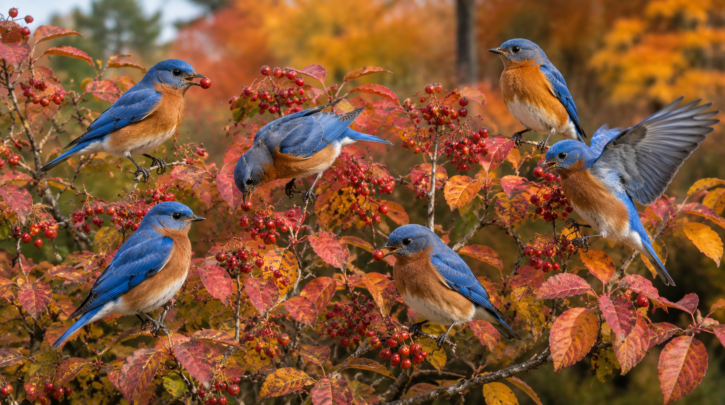

Fall marks a clear behavioral turn for bluebirds. Territorial pairs give way to loose flocks, insects give way to fruit, and for migratory populations, the journey south begins.
The End of Breeding Season
By early fall, breeding activity has typically wrapped up entirely, and any remaining fledglings from a late second (or third) brood have reached independence. This is the point to clean out nest boxes for the last time until next spring — removing old nest material discourages overwintering pests and gets the box ready for scouting activity the following year.
Fall Migration
Migration timing and distance vary considerably by species, as covered in detail in our migration guide. Broadly, fall migration runs roughly September through November, with Mountain Bluebirds undertaking the longest journeys and resident southern populations of Eastern and Western Bluebirds not migrating at all.
Post-Breeding Molt
Fall is also when adult bluebirds undergo a complete post-breeding molt, replacing worn feathers accumulated over a demanding breeding season with fresh plumage. This molt is typically finished before or during migration, so birds arrive on the wintering grounds (or settle into winter residency) in relatively fresh feather condition, ready for a long stretch of flocking and foraging with little of the wear visible on their feathers just a few months earlier.
The Diet Shift Toward Fruit
As insect availability drops with cooling temperatures, bluebirds shift heavily toward fruit and berries — sumac, dogwood, holly, viburnum, and cedar berries all become dietary staples. See our diet guide for the full seasonal breakdown of what this shift looks like in practice.
Flocking Behavior Begins
Outside the breeding season, bluebirds shift from the territorial pair dynamic of spring and summer to loose flocks, sometimes a dozen birds or more, that forage and roost together through fall and winter. This is a noticeable behavioral change from the solitary, defended-territory pattern that dominated the preceding months.
What to Do at Your Feeder
Fall is a reasonable time to keep a mealworm or suet feeder stocked for resident or lingering migrant bluebirds, and to start planting or maintaining native fruiting shrubs if you haven’t already — see our attracting bluebirds guide for specific plant recommendations that pay off most heavily in fall and winter.
Transitioning Feeder Habits From Summer
If a feeder saw heavy daily use during the breeding season to support hungry chicks, don’t be surprised if visit frequency drops noticeably once fruit becomes abundant and broods are done for the year. This is a normal seasonal adjustment rather than a sign birds have left the area — resident and lingering flocks are simply relying more on wild fruit and less on supplemental feeding until food becomes scarcer later in winter.
Wondering whether your local bluebirds will stick around through winter? Check our habitat and range guide for the resident-versus-migratory pattern in your region.
A Quieter Season to Watch
Fall offers a different, less frantic kind of bluebird watching than the breeding season — flocks moving through fruiting trees and shrubs, without the urgency of feeding chicks, make for relaxed observation if you know where the food sources are.
Preparing the Yard for Winter
Fall is also a practical time to take stock of the fruiting shrubs and trees on a property and consider whether additional native plantings would help support bluebirds through the coming winter. Species like dogwood, viburnum, and Eastern red cedar planted in fall have a full winter and spring to establish before the following fall’s fruiting season, making autumn a reasonable planting window for anyone building out a longer-term winter food source. See our attracting bluebirds guide for the full list of native plants worth considering.
Identifying Fall Flocks
A loose group of bluebirds moving through a hedgerow or fruiting tree in fall can be trickier to sex and age at a glance than a spring pair, since juveniles from the year’s later broods may still be finishing their transition out of spotted juvenile plumage. Patience and a good pair of binoculars — see our binoculars guide — make it easier to pick out individual birds within a moving flock, especially when several birds are actively feeding and moving between perches at once.
Fall Weather and Early Cold Snaps
An unusually early cold snap in fall can accelerate the diet shift toward fruit and push local migration timing earlier than usual for populations that do migrate, while resident populations simply lean more heavily on whatever fruiting shrubs are already available. Watching how quickly birds shift feeding behavior after a first hard freeze is one of the more visible signs of this seasonal transition in progress, and it’s a useful cue for deciding when to start topping off a mealworm or suet feeder more consistently for the winter ahead.