
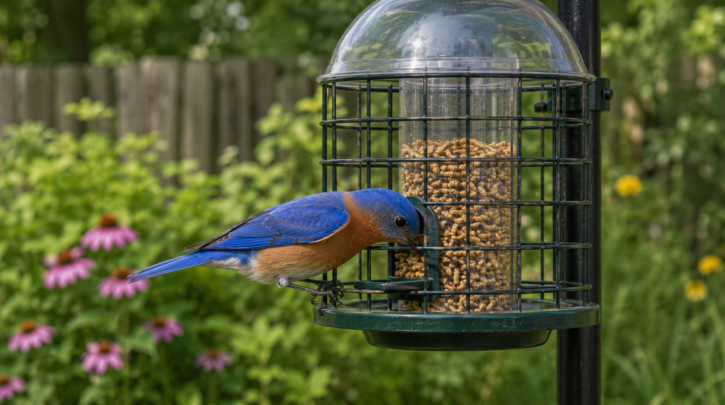

A dedicated mealworm feeder is the single most effective piece of gear for actually attracting bluebirds — see our feeder setup guide for the design principles behind what makes one work. Here are specific picks that put those principles into practice.
What Separates a Good Mealworm Feeder From a Bad One
- A caged or domed opening sized for bluebirds but too small or awkward for European Starlings
- Smooth interior walls so mealworms can’t easily crawl out before being eaten
- A stable, open platform design rather than a hanging tube meant for clinging birds
- Easy access for daily refilling and cleaning
Duncraft Easy-View Bluebird Feeder
Designed around visibility as much as function, this feeder uses a clear viewing dome so you can watch feeding activity up close while the recessed dish design keeps mealworms contained and easy for bluebirds to access. It’s a solid choice for anyone who wants a feeder positioned close to a window for regular observation.
See: Duncraft Easy-View Bluebird Feeder
Erva Baffled Bluebird Feeder
Built around a baffled cage design that shields the mealworm dish from both weather and larger birds, this feeder is a good option in areas with heavier starling or squirrel pressure. The baffle structure keeps rain from diluting or spoiling mealworms while still allowing bluebirds clear access through the caged opening.
See: Erva Baffled Bluebird Feeder
Suet and Nugget Feeders as a Complement
Beyond dedicated mealworm feeders, a flat suet platform for offering no-melt suet nuggets or crumbles works as a useful secondary food source, especially in colder months when fruit and insect availability both drop. Look for a platform-style tray rather than a hanging wire suet cage, since bluebirds don’t cling to vertical surfaces the way woodpeckers and chickadees do.
Live vs. Dried Mealworm Compatibility
Most caged and domed mealworm feeders work equally well with live or dried mealworms, though live mealworms can occasionally work their way toward gaps in a poorly sealed design. Checking that a feeder’s dish or tray has genuinely smooth, escape-proof walls is worth confirming before buying if you plan to feed live mealworms regularly — see our mealworm buying guide for the live-versus-dried tradeoffs in more detail.
Placement Tips for Any Feeder
Whichever feeder you choose, positioning matters as much as the product itself. Place it within view of a natural perch, away from dense shrubbery that could hide an ambush predator, and reasonably close to an active nest box during the breeding season to reduce the distance parents travel on each feeding trip.
Setting up your first feeder alongside a new box? See our nest box picks for models built to the same sparrow-resistant, predator-conscious standard.
Cleaning Routine
Whichever feeder you choose, plan for regular cleaning as part of ongoing maintenance rather than an afterthought. Live mealworm dishes in particular need frequent rinsing in warm weather to prevent mold and bacterial buildup, while dried mealworm and suet trays can generally go a bit longer between cleanings, though a weekly check is still a reasonable baseline.
Feeder Capacity and Refill Frequency
Smaller dish-style feeders need refilling once or twice daily during active feeding periods, while larger caged designs with a bigger reservoir can sometimes stretch to every other day, depending on how many birds are visiting. During peak chick-rearing weeks, expect to refill more often regardless of feeder size, since a pair feeding a full brood can go through a surprising amount of food in a single day.
Multi-Feeder Setups
On a property hosting more than one nesting pair, spacing out several smaller feeders rather than relying on one large central feeder tends to reduce competition and territorial conflict between pairs, giving each family more direct, closer access to supplemental food without having to cross into a neighboring pair’s territory.
Seasonal Adjustments
Mealworm feeding is most valuable during the breeding season, when growing chicks need concentrated protein, but resident bluebird populations can also benefit from continued feeding through winter, when natural insect availability drops sharply. In regions with year-round resident bluebirds, keeping a feeder stocked through the colder months is a reasonable extension of the same setup used during nesting season.
Squirrel-Proofing
Squirrels are less of a persistent problem at mealworm feeders than starlings, but a caged design sized tightly enough to exclude starlings will generally also exclude squirrels as an added benefit, since both are considerably bulkier than a bluebird. Mounting a feeder on a smooth pole with a baffle, the same setup used for nest box protection, further reduces squirrel access from below and keeps the whole feeding station consistent with the rest of your predator-management setup.