
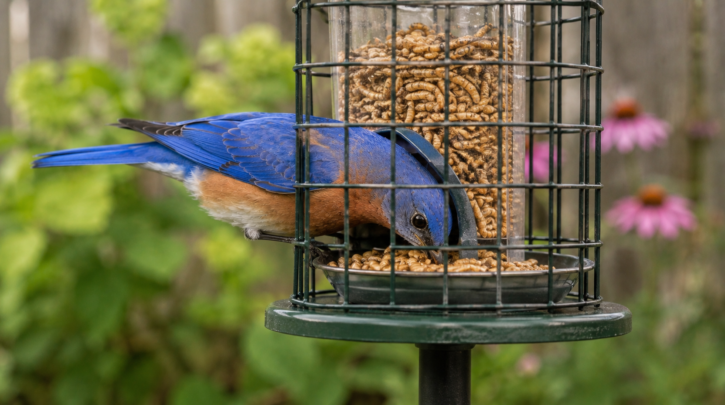

Feeding bluebirds successfully has almost nothing to do with a typical backyard feeder setup. Because bluebirds don’t eat seed and aren’t strong clinging birds like finches or chickadees, most standard hanging tube or hopper feeders simply don’t work for them — the food is wrong and the feeder design is wrong.
Why Standard Feeders Fail
- Seed-based feeders offer food bluebirds don’t eat
- Bluebirds are weak clingers and generally avoid feeders that require gripping a perch below a hanging tube
- Bluebirds strongly prefer a stable, open platform they can land on directly
Mealworm Feeders: The Core Setup
A dedicated mealworm feeder is the single most effective way to feed bluebirds. The best designs share a few features: a shallow dish or tray to hold mealworms, smooth interior walls so mealworms can’t easily crawl out before being eaten, and some form of access restriction — typically a wire cage or dome with an opening sized for bluebirds but too small or awkward for larger, more aggressive birds like European Starlings, which will otherwise clean out a dish in minutes.
Starling-Exclusion Design
European Starlings are the single biggest nuisance at an open mealworm dish — they’re smart, aggressive, and will dominate an unrestricted feeder quickly. Caged or domed mealworm feeders with an opening in roughly the one-and-a-half to two inch range let bluebirds slip through while blocking starlings, which are noticeably larger-bodied. See our mealworm feeder buying guide for specific models built around this exclusion principle.
Suet Feeders
No-melt suet dough, crumbled or cut into small nuggets, is a reasonable secondary food, especially in colder months. Because bluebirds don’t cling well to a standard wire suet cage, offering suet crumbles on a flat platform tray tends to work better than a hanging suet cage designed for woodpeckers and chickadees.
Platform Feeders for Fruit
A simple open platform tray also works well for offering chopped fruit — diced apple, softened raisins — particularly in fall and winter when natural fruit is a bigger part of the diet. Keeping the platform low, open, and close to natural perches mimics the ground-adjacent feeding style bluebirds already use in the wild.
Placement Tips
- Position the feeder within view of a natural perch — a fence line, low branch, or wire — so a bird can spot the food from its usual hunting post
- Keep the feeder away from dense shrubbery where cats or other predators could stage an ambush
- Place mealworm feeders relatively close to an existing nest box during the breeding season to cut down on the distance parents travel while feeding chicks
Cleaning and Maintenance
Mealworm dishes and suet trays should be cleaned regularly to prevent mold and bacterial buildup, especially with live mealworms in warm weather. A quick rinse and scrub every few days, with a more thorough cleaning weekly, keeps a feeder safe and appealing.
Combine a feeder with a properly sized nest box for the biggest impact — a reliable food source close to an active nest measurably reduces the distance and effort parents spend feeding chicks.
Feeder Materials
Wood and durable plastic are the two most common feeder materials, each with tradeoffs. Wood blends into a natural setting and holds up well outdoors, but requires periodic cleaning and occasional resealing to resist rot. Molded plastic feeders are easier to clean thoroughly and resist weathering better, though some designs can heat up uncomfortably in direct summer sun, which is worth considering when choosing a placement spot.
Squirrel and Raccoon Considerations
While starlings are the primary nuisance at mealworm feeders, squirrels and raccoons can also raid an unprotected dish, particularly overnight. Bringing a feeder in after dark, or choosing a pole-mounted design with a baffle similar to what’s used on nest boxes, cuts down on overnight losses without complicating daytime access for bluebirds.
Multiple Feeding Stations
On larger properties with more than one nesting pair or an active bluebird trail, spacing out several small mealworm feeders rather than relying on a single large one tends to reduce territorial conflict between pairs and gives each family easier, closer access to supplemental food during the demanding chick-rearing period.
When to Expect Results
A newly installed mealworm feeder can take anywhere from a few days to several weeks to be discovered, depending on how established the local bluebird population is and how visible the feeder is from a bird’s usual perches. Live mealworms, thanks to their movement, generally shorten this discovery period compared to starting with dried mealworms alone, which is one more reason many hosts begin a new feeder with a live batch before switching to a more convenient dried routine.