
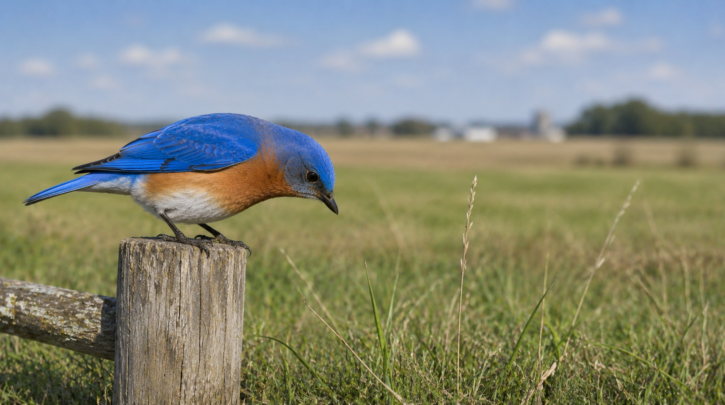

The single biggest misconception new bluebird hosts have is assuming a bag of standard birdseed will bring bluebirds to the yard. It won’t. Bluebirds are insectivores first and fruit-eaters second — seed barely registers in their natural diet, and understanding that distinction is the key to feeding them successfully.
This site participates in affiliate programs. If you buy through a link on this page, we may earn a commission at no extra cost to you. Affiliate disclosure
The Core Diet: Insects
Through spring and summer, insects and other small invertebrates make up the large majority of a bluebird’s diet. Beetles, crickets, grasshoppers, caterpillars, spiders, and snails are all regular prey, along with ants, moths, and earthworms. This is especially true during the nesting season, when growing chicks need the concentrated protein that insects provide far more than adults do on their own.
How Bluebirds Hunt
Bluebirds are “perch-and-pounce” hunters. A bird will sit on a low perch — a fence line, a low tree branch, a wire — scanning the ground below, then drop down suddenly to snatch prey it spots moving in short grass. This hunting style is exactly why bluebirds favor open habitat with short vegetation and scattered perches, and it explains why mowed pastures, orchards, and golf courses are classic bluebird habitat.
The Fall and Winter Shift: Fruit
As insect availability drops with colder weather, bluebirds shift heavily toward fruit and berries. Sumac, dogwood, holly, viburnum, cedar (juniper) berries, and even poison ivy berries (harmless to birds despite the plant’s effect on people) become dietary staples. In much of the Eastern Bluebird’s year-round Southern range, this fruit-heavy winter diet is what allows birds to stay resident instead of migrating.
What Bluebirds Rarely or Never Eat
- Standard mixed birdseed — sunflower, millet, and safflower go almost entirely untouched
- Hard-shelled nuts — their bill isn’t built for cracking shells
- Thistle/nyjer seed — a finch specialty, irrelevant to bluebirds
What You Can Offer at a Feeder
- Live or dried mealworms — by far the most effective bluebird attractant
- No-melt suet dough or suet nuggets, cut or crumbled into bite-sized pieces
- Chopped fruit such as raisins (softened in water) or diced apple during colder months
If you remember one fact about feeding bluebirds, make it this: they hunt insects, they don’t crack seed, and a standard seed feeder will almost always be ignored.
Putting It Together
The most effective way to support bluebirds through a feeder isn’t really “feeding” in the traditional sense — it’s supplementing a diet that’s still mostly wild insects and fruit. See our mealworm buying guide and feeder guide for the specifics on how to do that well, and our guide to attracting bluebirds for the bigger habitat picture beyond the feeder itself.
Ready to offer mealworms? See our picks in the best mealworm feeders guide — the right feeder design keeps starlings out and makes mealworms easy for bluebirds to find.
Regional and Species Differences in Diet
While the general insect-then-fruit pattern holds across all three species, there’s some regional nuance. Mountain Bluebirds, which breed in more open, insect-sparse high-elevation terrain, are known to hover-hunt for flying insects more often than Eastern or Western Bluebirds, which rely more heavily on ground-pouncing. Western Bluebirds in oak savanna habitat make particularly heavy use of mistletoe berries in winter, a food source less available across most of the Eastern Bluebird’s range.
Why Pesticide Use Matters So Much
Because insects make up the bulk of the diet for most of the year, and because that insect protein is essential for raising chicks, heavy pesticide use on lawns and gardens has an outsized negative effect on local bluebird populations — not through direct poisoning in most cases, but by simply removing the food supply a nesting pair depends on. Reducing pesticide use, or at minimum avoiding it during the spring and summer nesting window, is one of the most effective habitat changes a homeowner can make.
How Diet Changes With Age
Nestlings are fed almost exclusively soft-bodied insects and larvae by their parents — caterpillars in particular are a favored food during the first days after hatching, since they’re easy for a parent to carry and easy for a tiny chick to swallow. As chicks grow closer to fledging, parents begin bringing larger prey items, including beetles and grasshoppers, to match the increasing food demands of a rapidly growing brood.
A Note on Snails and Calcium
Snails deserve a specific mention: bluebirds and many other songbirds actively seek out snail shells during the breeding season as a calcium source, since calcium is essential for producing strong eggshells and for proper bone development in growing chicks. A yard with a healthy population of snails and other invertebrates is a meaningfully better bluebird habitat than one that’s been chemically cleared of them.
Water Alongside Food
Diet is only part of the picture. A shallow, reliable water source for drinking and bathing rounds out the resources a bluebird pair needs to stay in an area through a full breeding season, particularly during hot or dry stretches when natural water can be scarce.
Our pick is the Birdfy Bath Pro, a solar-powered fountain bath whose moving water helps bluebirds find it, with a camera that records every visit.