
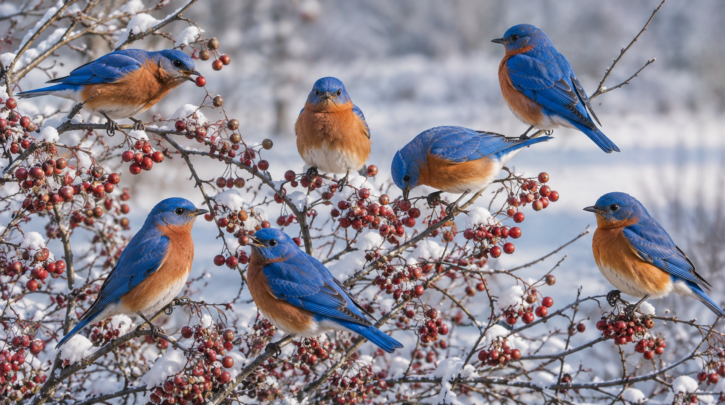

The honest answer is: it depends on which bluebird, and where. All three species show what ornithologists call partial migration — some populations move seasonally, others stay put year-round — but the balance between the two looks different for each species.
Eastern Bluebird: Mostly Resident in the South, Migratory in the North
Eastern Bluebirds in the southern and central United States are largely year-round residents, staying put through winter thanks to a diet that shifts heavily toward fruit and berries when insects become scarce. Northern populations, particularly in Canada and the northern-tier states, migrate south for winter, typically not moving especially far — often just into the southern and central states rather than undertaking a long-distance journey.
Western Bluebird: Similar Partial Pattern
Western Bluebirds follow a broadly similar pattern to their eastern relatives. Coastal and lower-elevation populations tend to stay resident year-round, while birds breeding at higher elevations or further north and inland shift to lower elevations or milder regions for winter, rather than undertaking a dramatic long-distance migration.
Mountain Bluebird: The Most Migratory of the Three
Mountain Bluebirds are the clearest migrants of the group. Breeding as far north as Alaska and the Yukon, they can’t realistically stay resident through a subarctic winter, and most populations undertake a genuine long-distance migration south to wintering grounds across the southwestern United States and northern Mexico.
Migration Timing
- Fall migration: roughly September through November, varying by latitude and species
- Spring return: roughly February through April, with southern and resident populations already in place well before migrants arrive further north
Flocking Behavior Outside the Breeding Season
Bluebirds are territorial and largely solitary as breeding pairs during nesting season, but that changes once breeding wraps up. Outside the nesting months, bluebirds of all three species commonly gather into loose flocks, sometimes numbering a dozen or more birds, moving together to forage on fruit and roost communally — a noticeable behavioral shift from the territorial pair dynamic seen all spring and summer.
Why Winter Diet Determines Migration
The fruit-heavy winter diet available across much of the southern range is a big part of why so many Eastern and Western Bluebirds can stay resident rather than migrate — unlike strict insectivores that have no fallback food source once insects disappear for the season, bluebirds can shift to berries and survive a cold winter without leaving, provided the local habitat actually offers enough fruiting shrubs and trees.
What This Means for Feeding
In regions with resident, non-migratory bluebird populations, mealworm feeders and fruiting plantings can be useful year-round rather than only during the breeding season, since local birds stick around through winter and benefit from consistent supplemental food during colder, leaner months.
Curious whether resident bluebirds behave differently in winter versus the breeding season? See our seasonal guides, starting with bluebirds in winter.
How Migration Distance Compares Across Species
Even among the two “partial migrant” species, the actual distance traveled by migrating individuals tends to be modest — often just a shift of a few hundred miles into a milder climate zone rather than a true long-haul journey. Mountain Bluebirds stand apart here: birds breeding in Alaska or the Yukon and wintering in the desert Southwest can cover well over a thousand miles each way, a genuinely long-distance migration by songbird standards.
Weather-Driven Movement Versus True Migration
Even resident populations sometimes shift locally in response to severe cold snaps or ice storms that temporarily cut off access to fruit, moving short distances to find better food availability before returning once conditions improve. This kind of short-term, weather-driven movement is distinct from true seasonal migration, though it can look similar from a backyard observer’s perspective if a resident bluebird population briefly disappears during a hard freeze.
Migration and Nest-Box Timing
For anyone hosting migratory bluebirds, box readiness matters most in the weeks just before returning migrants arrive in spring — boxes should already be cleaned out and mounted well before the first birds show up, since early-arriving individuals often begin scouting for nest sites almost immediately upon return.
Late Winter Scouting Behavior
Even in areas with resident, non-migratory populations, late winter often brings a noticeable uptick in bluebird activity around boxes, as pairs that have spent the colder months in loose flocks begin re-establishing breeding territories and checking familiar cavities. This scouting phase can start well before actual nest building, which is why boxes left up and clean through winter tend to attract more attention early in the season than boxes only put up right before nesting begins.